
-

N-Methyl-N- (N, N-dimethylaminoethyl) -Aminoethanol Polyurethane Dabco CAS 2212-32-0
Organic Amine N-Methyl-N- (N, N-dimethylaminoethyl) -Aminoethanol CAS 2212-32-0
Quick details of N-Methyl-N-(N,N-dimethylaminoethyl)-aminoethanol
Product name N-Methyl-N-(N,N-dimethylaminoethyl)-aminoethanol
CAS No. 2212-32-0
Molecular formula C7H18N2O
Molecular weight 146.23
Appearance Liquid
2.Usage of N-Methyl-N-(N,N-dimethylaminoethyl)-aminoethanol
It Can be used as amine catalyst.
3.Storage of N-Methyl-N-(N,N-dimethylaminoethyl)-aminoethanol
Ventilated warehouse; keep away from sunshine; avoid fire; avoid moisture. -

3, 3′-Iminobis (N, N-dimethylpropylamine) Tmbpa CAS 6711-48-4
Keywords
N,N,N',N'-TetramethyldipropylenetriamineN,N,N',N'-Tetramethyldipropylenetriamine supplierHigh quality N,N,N',N'-Tetramethyldipropylenetriamine
Quick Details
ProName: High quality N,N,N',N'-Tetramethyldipr...CasNo: 6711-48-4Molecular Formula: C10H25N3Appearance: white-off solid or colorless liquid ( ...Application: special chemicalDeliveryTime: Industrial GradePackAge: 25kgs/fiber drum or 200kgs/UN drumPort: SHANGHAI / QINGDAOProductionCapacity: Metric Ton/DayPurity: 99%Storage: in a cool and dry place
N,N'-Dimethylaminopropyl N-ethylcarbodiimide hydrochloride 25952-53-8
N,N-Dimethylethylamine 598-56-1
N,N-Diethylformamide 617-84-5
N,N-Dimethylhydroxylamine (DEHA) 3710-84-7
N-Benzyl-N,N-dimethyltetradecan-1-aminium chloride 139-08-2
N,N,N',N'-Tetramethyldipropylenetriamine 6711-48-4
N,N,N'-trimethylamino-N'-ethylethanolamine 2212-32-0
N,N'''-1,6-Hexanediylbis(N'-cyanoguanidine) 15894-70-9
N,N-Dimethyl-p-phenylenediamine sulfate 536-47-0
4-Chloro-N,N-dimethylaniline 698-69-1
N,N-Dimethylmorpholine-4-carboxamide 38952-61-3
4-Methyl-N,N-diphenylaniline 4316-53-4
3-Methyl-N,N-diethylbenzamide 94271-03-1
N,N-Dicyclohexylmethylamine 7560-83-0
(1R, 2R)-(-)-N,N'-dimethylcyclohexane-1,2-diamine 68737-65-5
N,N-Diethylcyclohexylamine 91-65-6
N,N-Bis(3-aminopropyl)dodecylamine 2372-82-9
N,N-Diethylethylenediamine 100-36-7
N,N-Diethylpiperidin-4-amine 143300-64-5
N,N'-Dimethyl-N-2-(methylamino)ethylethylenediamine 105-84-0
N,N,N-Trimethylpropan-1-aminium bromide 2650-50-2
N,N,N',N'-Tetramethyl-p-phenylenediamine dihydrochloride 637-01-4
2,3-Dihydroxy-N,N,N-trimethylpropan-1-aminium chloride 34004-36-9
-

Tetradecyldimethylbenzylammonium Chloride CAS: 139-08-2
ocosenyl trimethyl ammonium chloride is an organic ammonium salt, its long chain alkyl group provides good hydrophobicity and surface activity, while the ammonium chloride group gives it cationic properties, commonly used as an emulsifier, is used as a raw material for conditioner and shampoo
Product Specification
Molecular Weight 404.16
Boiling point /
Melting point /
Density /
Purity ≥99.0%
Acidity coefficient (pKa) /
Soluble Soluble in chloroform (a little), methanol (a little)
Water solubility /
Color White
Application
Commonly used as an emulsifier, it is used as an ingredient in conditioner and shampoo. -
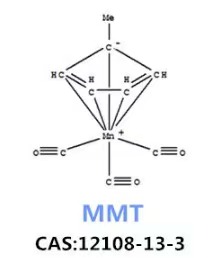
Methylcyclopentadienyl CAS:12108-13-3 PURITY 99%
Methylcyclopentadienyl
It is an organometallic compound with the chemical formula C7H6MnO3.
Purpose: Gasoline antiknock agent, gasoline standard increaser, unleaded gasoline antiknock agent, gasoline octane improver, standard increaser, octane additive. -
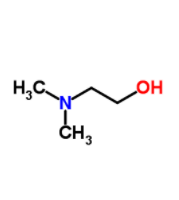
N,N-dimethylethanolamine CAS: 108-01-0 PURITY : 99%
N,N-dimethylethanolamine CAS: 108-01-0
It is a colorless liquid with a pungent odor. Odor threshold: 0.25 ppm. Molecularweight 5 89.16; Boiling point =133℃; Freezing/Meltingpoint=259℃; Flash point =41℃ (oc); Autoignitiontemperature 5=295℃. Explosive limits: LEL 5=1.6%;UEL 5=11.9%. Hazard Identification (based on NFPA-704M Rating System): Health 2, Flammability 2, Reactivity 0.Soluble in water.
It is also known as dimethylaminoethanol. Studies indicate skin-firming properties, and an ability to reduce the appearance of fine lines and wrinkles as well as dark circles under the eyes. It is considered anti-aging, and antiinflammatory, and has exhibited free-radical scavenging activity. Also used as corrosion inhibitor, anti-scaling agent, paint additive, coating additive and solids separation agent. It is also used as an intermediate for active pharmaceutical ingredients and dyes. It serves as a curing agent for polyurethanes and epoxy resins. Further, it is used as an additive to boiler water. In addition to this, it is used therapeutically as a CNS stimulant.
-
N,N-dimethylethanolamine CAS: 108-01-0 PURITY : 99%
N,N-dimethylethanolamine CAS: 108-01-0
It is a colorless liquid with a pungent odor. Odor threshold: 0.25 ppm. Molecularweight 5 89.16; Boiling point =133℃; Freezing/Meltingpoint=259℃; Flash point =41℃ (oc); Autoignitiontemperature 5=295℃. Explosive limits: LEL 5=1.6%;UEL 5=11.9%. Hazard Identification (based on NFPA-704M Rating System): Health 2, Flammability 2, Reactivity 0.Soluble in water.
It is also known as dimethylaminoethanol. Studies indicate skin-firming properties, and an ability to reduce the appearance of fine lines and wrinkles as well as dark circles under the eyes. It is considered anti-aging, and antiinflammatory, and has exhibited free-radical scavenging activity. Also used as corrosion inhibitor, anti-scaling agent, paint additive, coating additive and solids separation agent. It is also used as an intermediate for active pharmaceutical ingredients and dyes. It serves as a curing agent for polyurethanes and epoxy resins. Further, it is used as an additive to boiler water. In addition to this, it is used therapeutically as a CNS stimulant.
-
Methylcyclopentadienyl CAS:12108-13-3 PURITY 99%
Methylcyclopentadienyl
It is an organometallic compound with the chemical formula C7H6MnO3.
Purpose: Gasoline antiknock agent, gasoline standard increaser, unleaded gasoline antiknock agent, gasoline octane improver, standard increaser, octane additive. -
N,N-dimethylethanolamine CAS: 108-01-0 PURITY : 99%
N,N-dimethylethanolamine CAS: 108-01-0
It is a colorless liquid with a pungent odor. Odor threshold: 0.25 ppm. Molecularweight 5 89.16; Boiling point =133℃; Freezing/Meltingpoint=259℃; Flash point =41℃ (oc); Autoignitiontemperature 5=295℃. Explosive limits: LEL 5=1.6%;UEL 5=11.9%. Hazard Identification (based on NFPA-704M Rating System): Health 2, Flammability 2, Reactivity 0.Soluble in water.
It is also known as dimethylaminoethanol. Studies indicate skin-firming properties, and an ability to reduce the appearance of fine lines and wrinkles as well as dark circles under the eyes. It is considered anti-aging, and antiinflammatory, and has exhibited free-radical scavenging activity. Also used as corrosion inhibitor, anti-scaling agent, paint additive, coating additive and solids separation agent. It is also used as an intermediate for active pharmaceutical ingredients and dyes. It serves as a curing agent for polyurethanes and epoxy resins. Further, it is used as an additive to boiler water. In addition to this, it is used therapeutically as a CNS stimulant.
-
Methylcyclopentadienyl CAS:12108-13-3 PURITY 99%
Methylcyclopentadienyl
It is an organometallic compound with the chemical formula C7H6MnO3.
Purpose: Gasoline antiknock agent, gasoline standard increaser, unleaded gasoline antiknock agent, gasoline octane improver, standard increaser, octane additive. -
N,N-dimethylethanolamine CAS: 108-01-0 PURITY : 99%
N,N-dimethylethanolamine CAS: 108-01-0
It is a colorless liquid with a pungent odor. Odor threshold: 0.25 ppm. Molecularweight 5 89.16; Boiling point =133℃; Freezing/Meltingpoint=259℃; Flash point =41℃ (oc); Autoignitiontemperature 5=295℃. Explosive limits: LEL 5=1.6%;UEL 5=11.9%. Hazard Identification (based on NFPA-704M Rating System): Health 2, Flammability 2, Reactivity 0.Soluble in water.
It is also known as dimethylaminoethanol. Studies indicate skin-firming properties, and an ability to reduce the appearance of fine lines and wrinkles as well as dark circles under the eyes. It is considered anti-aging, and antiinflammatory, and has exhibited free-radical scavenging activity. Also used as corrosion inhibitor, anti-scaling agent, paint additive, coating additive and solids separation agent. It is also used as an intermediate for active pharmaceutical ingredients and dyes. It serves as a curing agent for polyurethanes and epoxy resins. Further, it is used as an additive to boiler water. In addition to this, it is used therapeutically as a CNS stimulant.
-
N,N-dimethylethanolamine CAS: 108-01-0 PURITY : 99%
N,N-dimethylethanolamine CAS: 108-01-0
It is a colorless liquid with a pungent odor. Odor threshold: 0.25 ppm. Molecularweight 5 89.16; Boiling point =133℃; Freezing/Meltingpoint=259℃; Flash point =41℃ (oc); Autoignitiontemperature 5=295℃. Explosive limits: LEL 5=1.6%;UEL 5=11.9%. Hazard Identification (based on NFPA-704M Rating System): Health 2, Flammability 2, Reactivity 0.Soluble in water.
It is also known as dimethylaminoethanol. Studies indicate skin-firming properties, and an ability to reduce the appearance of fine lines and wrinkles as well as dark circles under the eyes. It is considered anti-aging, and antiinflammatory, and has exhibited free-radical scavenging activity. Also used as corrosion inhibitor, anti-scaling agent, paint additive, coating additive and solids separation agent. It is also used as an intermediate for active pharmaceutical ingredients and dyes. It serves as a curing agent for polyurethanes and epoxy resins. Further, it is used as an additive to boiler water. In addition to this, it is used therapeutically as a CNS stimulant.
-
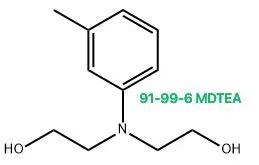
m-Tolyldiethanolamine CAS: 91-99-6
m-Tolyldiethanolamine,also known as DEET (diethylamide N,N-dimethyl-3-hydramide), is a common insect repellent. It is soluble in organic solvents such as ester, alcohol, and ether, and slightly soluble in water. This compound has good heat resistance and light resistance.
m-Tolyldiethanolamine is mainly used as an insect repellent to prevent bites and harassment from mosquitoes, ticks, fleas, grasshoppers and other insects. Its efficacy lasts for a long time and has a high repellent effect on mosquitoes and other insects. It is widely used in outdoor activities, wilderness exploration and military protection and other fields.
There are many methods for preparing N,N-bishydroxyethyl m-toluidine. One of the commonly used methods is to react m-toluidine and formamide in the presence of an alkaline catalyst. Specific steps are as follows:
1. React formamide with m-toluidine under alkaline conditions to generate N-formyl m-toluidine.
2. Heat the reaction product under acidic conditions to convert N-formyl m-toluidine into N,N-bishydroxyethyl m-toluidine.