
-
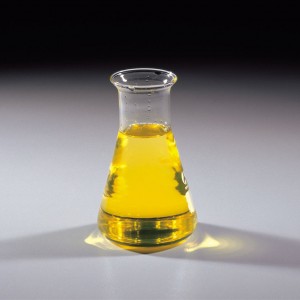
Dimethyl sulfate CAS:77-78-1
Dimethyl sulfate CAS:77-78-1
It is colorless transparent oily liquid. Slightly soluble in water, soluble in ethanol, ether, acetone, etc.
It is widely used in medicine, pesticides and other industrial industries. It is a good methylating agent and is used in the manufacture of dimethyl sulfoxide, caffeine, vanillin, aminopyrine, trimethoprim and the pesticide acephate, etc. In organic synthesis, it is used as methylating agent instead of alkyl halide. -
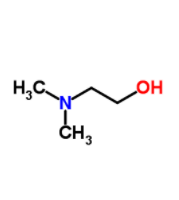
N,N-dimethylethanolamine CAS: 108-01-0 PURITY : 99%
N,N-dimethylethanolamine CAS: 108-01-0
It is a colorless liquid with a pungent odor. Odor threshold: 0.25 ppm. Molecularweight 5 89.16; Boiling point =133℃; Freezing/Meltingpoint=259℃; Flash point =41℃ (oc); Autoignitiontemperature 5=295℃. Explosive limits: LEL 5=1.6%;UEL 5=11.9%. Hazard Identification (based on NFPA-704M Rating System): Health 2, Flammability 2, Reactivity 0.Soluble in water.
It is also known as dimethylaminoethanol. Studies indicate skin-firming properties, and an ability to reduce the appearance of fine lines and wrinkles as well as dark circles under the eyes. It is considered anti-aging, and antiinflammatory, and has exhibited free-radical scavenging activity. Also used as corrosion inhibitor, anti-scaling agent, paint additive, coating additive and solids separation agent. It is also used as an intermediate for active pharmaceutical ingredients and dyes. It serves as a curing agent for polyurethanes and epoxy resins. Further, it is used as an additive to boiler water. In addition to this, it is used therapeutically as a CNS stimulant.
-
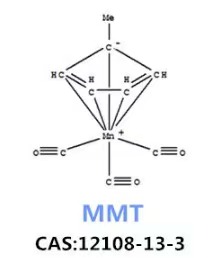
Methylcyclopentadienyl CAS:12108-13-3 PURITY 99%
Methylcyclopentadienyl
It is an organometallic compound with the chemical formula C7H6MnO3.
Purpose: Gasoline antiknock agent, gasoline standard increaser, unleaded gasoline antiknock agent, gasoline octane improver, standard increaser, octane additive. -
![[Copy] N,N-Dimethylcyclohexylamine CAS:98-94-2](https://cdn.globalso.com/mit-ivy/微信图片_202404020913153-300x300.jpg)
[Copy] N,N-Dimethylcyclohexylamine CAS:98-94-2
N,N-Dimethylcyclohexylamine CAS:98-94-2
Chemical Properties
Colorless or light yellow transparent liquid.Mainly used as polyurethane rigid foam catalyst. One of the major applications is insulating foams, including sprays, panels, glue laminates and refrigeration formulations. N,N-dimethylcyclohexylamine is also suitable for the manufacture of rigid foam furniture frames and decorative parts. This catalyst is used in hard foam Chemicalbook products. It can be used alone as the main catalyst without adding organic tin. It can also be supplemented with JD series catalysts according to process and product requirements. This product is also used as a rubber accelerator and an intermediate for synthetic fibers.
-
N,N-dimethylethanolamine CAS: 108-01-0 PURITY : 99%
N,N-dimethylethanolamine CAS: 108-01-0
It is a colorless liquid with a pungent odor. Odor threshold: 0.25 ppm. Molecularweight 5 89.16; Boiling point =133℃; Freezing/Meltingpoint=259℃; Flash point =41℃ (oc); Autoignitiontemperature 5=295℃. Explosive limits: LEL 5=1.6%;UEL 5=11.9%. Hazard Identification (based on NFPA-704M Rating System): Health 2, Flammability 2, Reactivity 0.Soluble in water.
It is also known as dimethylaminoethanol. Studies indicate skin-firming properties, and an ability to reduce the appearance of fine lines and wrinkles as well as dark circles under the eyes. It is considered anti-aging, and antiinflammatory, and has exhibited free-radical scavenging activity. Also used as corrosion inhibitor, anti-scaling agent, paint additive, coating additive and solids separation agent. It is also used as an intermediate for active pharmaceutical ingredients and dyes. It serves as a curing agent for polyurethanes and epoxy resins. Further, it is used as an additive to boiler water. In addition to this, it is used therapeutically as a CNS stimulant.
-
N,N-dimethylethanolamine CAS: 108-01-0 PURITY : 99%
N,N-dimethylethanolamine CAS: 108-01-0
It is a colorless liquid with a pungent odor. Odor threshold: 0.25 ppm. Molecularweight 5 89.16; Boiling point =133℃; Freezing/Meltingpoint=259℃; Flash point =41℃ (oc); Autoignitiontemperature 5=295℃. Explosive limits: LEL 5=1.6%;UEL 5=11.9%. Hazard Identification (based on NFPA-704M Rating System): Health 2, Flammability 2, Reactivity 0.Soluble in water.
It is also known as dimethylaminoethanol. Studies indicate skin-firming properties, and an ability to reduce the appearance of fine lines and wrinkles as well as dark circles under the eyes. It is considered anti-aging, and antiinflammatory, and has exhibited free-radical scavenging activity. Also used as corrosion inhibitor, anti-scaling agent, paint additive, coating additive and solids separation agent. It is also used as an intermediate for active pharmaceutical ingredients and dyes. It serves as a curing agent for polyurethanes and epoxy resins. Further, it is used as an additive to boiler water. In addition to this, it is used therapeutically as a CNS stimulant.
-
Methylcyclopentadienyl CAS:12108-13-3 PURITY 99%
Methylcyclopentadienyl
It is an organometallic compound with the chemical formula C7H6MnO3.
Purpose: Gasoline antiknock agent, gasoline standard increaser, unleaded gasoline antiknock agent, gasoline octane improver, standard increaser, octane additive. -
N,N-dimethylethanolamine CAS: 108-01-0
N,N-dimethylethanolamine CAS: 108-01-0
It is a colorless liquid with a pungent odor. Odor threshold: 0.25 ppm. Molecularweight 5 89.16; Boiling point =133℃; Freezing/Meltingpoint=259℃; Flash point =41℃ (oc); Autoignitiontemperature 5=295℃. Explosive limits: LEL 5=1.6%;UEL 5=11.9%. Hazard Identification (based on NFPA-704M Rating System): Health 2, Flammability 2, Reactivity 0.Soluble in water.
It is also known as dimethylaminoethanol. Studies indicate skin-firming properties, and an ability to reduce the appearance of fine lines and wrinkles as well as dark circles under the eyes. It is considered anti-aging, and antiinflammatory, and has exhibited free-radical scavenging activity. Also used as corrosion inhibitor, anti-scaling agent, paint additive, coating additive and solids separation agent. It is also used as an intermediate for active pharmaceutical ingredients and dyes. It serves as a curing agent for polyurethanes and epoxy resins. Further, it is used as an additive to boiler water. In addition to this, it is used therapeutically as a CNS stimulant.
-
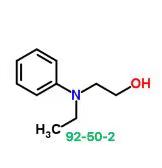
N-Ethyl-N-hydroxyethylaniline CAS: 92-50-2
N-Ethyl-N-hydroxyethylaniline CAS: 92-50-2
It Is an organic compound. It is an amide derivative between an ethyl compound and aniline.
Appearance: N-ethyl-N-hydroxyethylaniline is a colorless to slightly yellow oily liquid.
- Solubility: It is soluble in many organic solvents, such as alcohol and ether, and slightly soluble in water.
- Stability: Relatively stable at room temperature, but contact with strong oxidants should be avoided.
use:
- Chemical reagents: N-ethyl-N-hydroxyethylaniline can be used as a reagent in organic synthesis.
- Fiber dyes: It can be used as a component of dyes and is widely used in the textile and printing industries. -
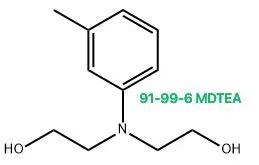
m-Tolyldiethanolamine CAS: 91-99-6
m-Tolyldiethanolamine,also known as DEET (diethylamide N,N-dimethyl-3-hydramide), is a common insect repellent. It is soluble in organic solvents such as ester, alcohol, and ether, and slightly soluble in water. This compound has good heat resistance and light resistance.
m-Tolyldiethanolamine is mainly used as an insect repellent to prevent bites and harassment from mosquitoes, ticks, fleas, grasshoppers and other insects. Its efficacy lasts for a long time and has a high repellent effect on mosquitoes and other insects. It is widely used in outdoor activities, wilderness exploration and military protection and other fields.
There are many methods for preparing N,N-bishydroxyethyl m-toluidine. One of the commonly used methods is to react m-toluidine and formamide in the presence of an alkaline catalyst. Specific steps are as follows:
1. React formamide with m-toluidine under alkaline conditions to generate N-formyl m-toluidine.
2. Heat the reaction product under acidic conditions to convert N-formyl m-toluidine into N,N-bishydroxyethyl m-toluidine. -

Triethylene glycol CAS: 112-27-6
Triethylene glycol CAS: 112-27-6
It is a colorless, odorless, hygroscopic, viscous liquid. Miscible with water and ethanol, slightly soluble in diethyl ether, almost insoluble in petroleum ether.
Used as an excellent dehydrating agent for natural gas, oil field associated gas and carbon dioxide; used as a solvent for nitrocellulose, rubber, resin, grease, paint, pesticides, etc.; air disinfectant; polyvinyl chloride, polyvinyl acetate resin, glass fiber and triethylene glycol lipid plasticizers for asbestos pressed boards; tobacco anti-drying agents, fiber lubricants and natural gas desiccants; also used in organic synthesis, such as the production of brake oil with high boiling point and good low temperature performance。
It is also used as gas chromatography stationary solution and solvent for nitrocellulose and various resins. It is also used in organic synthesis. -
Dimethyl sulfate CAS:77-78-1
Dimethyl sulfate CAS:77-78-1
It is colorless transparent oily liquid. Slightly soluble in water, soluble in ethanol, ether, acetone, etc.
It is widely used in medicine, pesticides and other industrial industries. It is a good methylating agent and is used in the manufacture of dimethyl sulfoxide, caffeine, vanillin, aminopyrine, trimethoprim and the pesticide acephate, etc. In organic synthesis, it is used as methylating agent instead of alkyl halide.