



Melting point 172-175°C (lit.)
Boiling point 285°C (lit.)
Desert density 600 kg/m³
Density 1.32 Vapor pressure 3.81 (vs. air)
Vapor pressure 1 mmHg (132°C)
Flash point 165°C
Storage conditions Store below +30°C.
Solubility in water 50 mg/mL,
clarity Acidity coefficient (pKa) 10.35 (at 20°C)
Morphology Needle-shaped or moldable powder
Color white to off-white
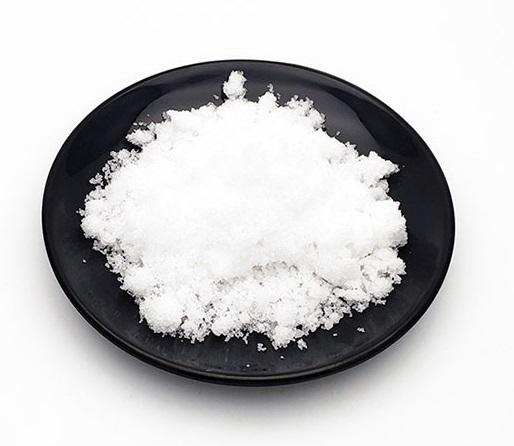
Hydroquinone, also known as 1,4-benzene, has the molecular formula C6H6O2 and a molecular weight of 110.11. It is a colorless or white crystalline solid. It readily changes color upon exposure to light. Its aqueous solution oxidizes in air to a brown color, and oxidation is accelerated in alkaline media. Its melting point is 170–171℃, boiling point 285–287℃, relative density 1.33215, and UV wavelength in water is 288 nm. It is readily soluble in hot water, ethanol, and ether, and slightly soluble in benzene. It is chemically reactive, easily oxidized, and can undergo esterification and substitution reactions..
Hydroquinone is an important organic developer that only functions in a strongly alkaline solution. Its reduction rate is slower than Metol, but once the image appears, the density increases rapidly, resulting in greater contrast. Development is fastest at 27°C–29°C, slows below 15°C, and almost stops below 5°C. Larger amounts can produce a warming effect in photographs. It is used as a general photographic developer; a physical developer and redeveloping reducing agent. It is generally used in combination with phenoxybenzene and Metol.
Hydroquinone is primarily used as a photographic developer. Hydroquinone and its alkylates are widely used as polymerization inhibitors added during monomer storage and transportation, typically at concentrations of approximately 200 ppm. Hydroquinone monomethyl ether is an intermediate in the production of the edible oil antioxidant BHA; hydroquinone dimethyl ether is an intermediate in dyes, organic pigments, and fragrances; hydroquinone diethyl ether is an intermediate in photosensitive pigments and dyes. Hydroquinone is also used to produce N,N’-diphenyl-p-phenylenediamine, an antioxidant and deodorizing agent used in rubber and gasoline.
Hydroquinone was previously produced using the aniline process. Currently, industrial production has also developed methods such as the catechol co-production process, the cumene process, and the bisphenol A process. my country currently still uses the aniline process. 1. Aniline is oxidized to p-benzoquinone by manganese dioxide in a sulfuric acid medium, and then reduced to hydroquinone by iron powder. The product is then concentrated, decolorized, crystallized, and dried to obtain the final product. Industrial grade hydroquinone content ≥99%, photographic grade ≥99.5%. Raw material consumption quotas (Chemicalbook): Aniline 1250 kg/t, sulfuric acid (93%) 5500 kg/t, pyrolusite powder (containing 60-65% manganese dioxide) 5950 kg/t, iron powder (containing ≥90% Fe) 540 kg/t. 2. It is also produced from nitrobenzene through hydrogenation and heating. 2. Using phenol as a raw material, catechol and hydroquinone are prepared by oxidation with hydrogen peroxide, and then separated to obtain catechol and hydroquinone respectively.
Contact information
MIT-IVY INDUSTRY CO.,LTD
Chemical Industry Park, 69 Guozhuang Road, Yunlong District, Xuzhou City,
Jiangsu Province, China 221100 TEL: 0086-15252035038 FAX:0086-0516-83666375
WHATSAPP:0086-15252035038 EMAIL:INFO@MIT-IVY.COM
Post time: Apr-15-2026