




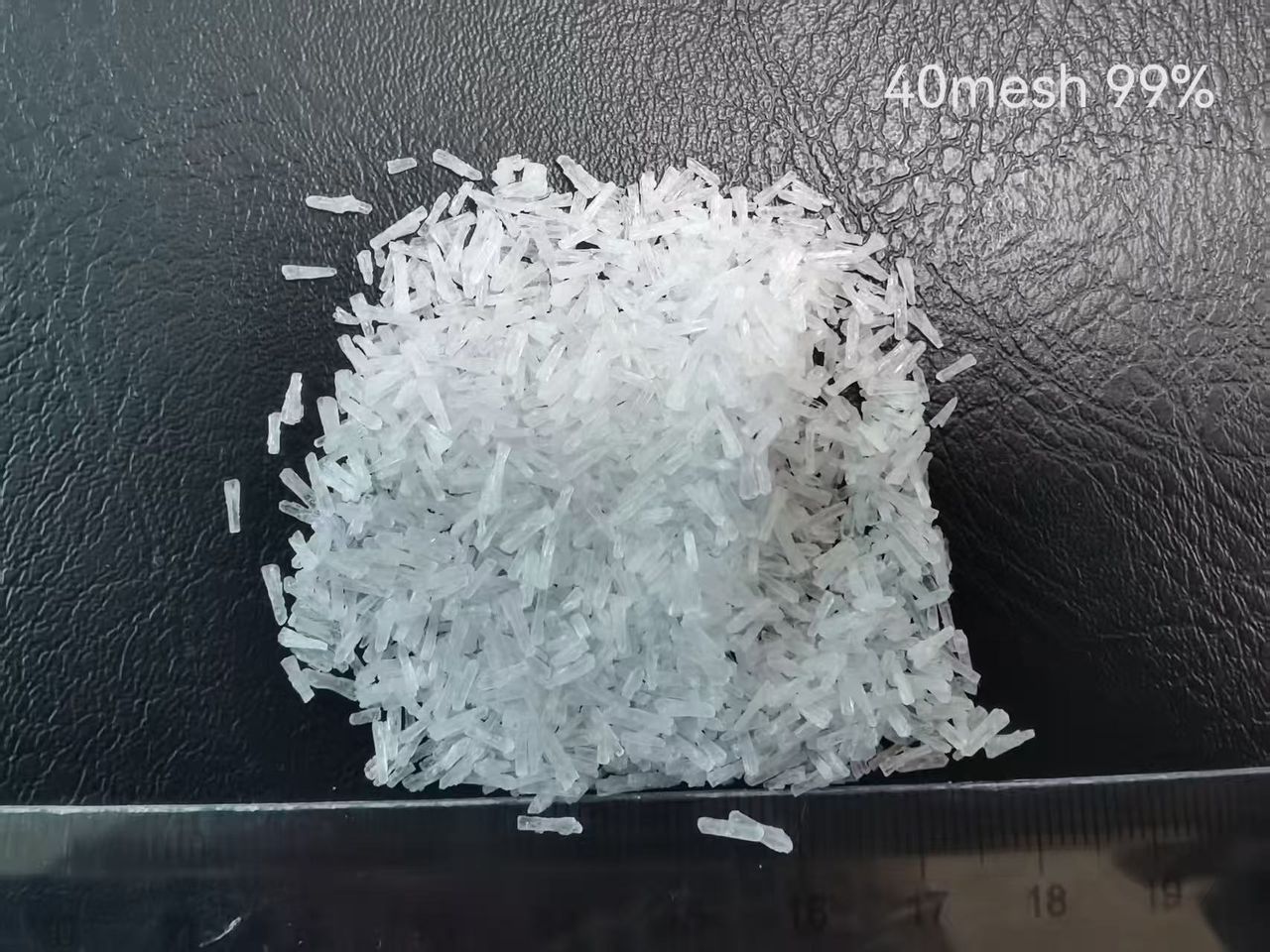
Monosodium glutamate (MSG) is the primary component of the food seasoning MSG; it is a sodium salt formed from sodium ions and glutamate ions. At room temperature, it appears as colorless, odorless crystals; it decomposes and melts at 232°C and is readily soluble in water (solubility: 74 g/100 mL).
Monosodium glutamate (MSG) has a history spanning over a century; the acidic amino acid at its core was first obtained in 1866 by Ritthausen through the sulfuric acid hydrolysis of wheat gluten. In 1908, Dr. Kikunae Ikeda isolated the savory component from kelp and identified it as the sodium salt of glutamic acid, subsequently bringing a chemical seasoning based on this substance to market. While MSG is produced internationally using sugar or molasses as raw materials, production in my country relies on grain crops such as corn or rice.
For a considerable period, the health benefits and risks of monosodium glutamate (MSG) have been a subject of debate. While MSG consumption within normal limits does not cause any harm, excessive consumption can lead to symptoms of poisoning in some individuals, particularly Westerners, such as headaches, facial flushing, excessive sweating, facial pressure or swelling, numbness in or around the mouth, burning sensation in the stomach, and chest pain. Symptoms can be alleviated by taking 50 mg of vitamin B6 daily. In daily life, MSG should be used in moderation; the recommended daily intake is no more than 20 grams per person. Furthermore, when stir-frying vegetables, MSG should be added only when the dish is almost finished cooking. This is because monosodium glutamate (MSG) transforms into sodium pyroglutamate (SPG) at 120°C. SPG not only has very low umami flavor but is also toxic and carcinogenic. Since oil temperatures during stir-frying are typically between 150°C and 200°C, this temperature can cause MSG to convert into toxic SPG. Therefore, steaming or boiling are the preferred cooking methods for dishes containing MSG.
Monosodium glutamate (MSG) is a widely used flavor enhancer known for imparting the “umami” (savory) taste and intensifying other flavors. It is extensively employed as a food seasoning, either on its own or in combination with other ingredients such as amino acids. When added to food, it serves to enhance the overall flavor profile.
Chemical properties: Colorless to white prismatic crystals or white crystalline powder. It has a slightly sweet or salty taste and is essentially odorless, with a taste threshold of 0.014%. It is non-hygroscopic and stable to light and heat; when a 10% aqueous solution (pH 6.9) is heated at 100°C for 3 hours with aeration, the decomposition rate is approximately 0.6%. It loses its water of crystallization when heated to 120°C. Melting point: 195°C; relative density: 1.635; bulk density: 1.20. It is readily soluble in water (71.7 g/100 mL), sparingly soluble in ethanol, and insoluble in diethyl ether. The pH of a 5% aqueous solution ranges from 6.7 to 7.2.
Contact:
MIT-IVY INDUSTRY CO. ,LTD
Eason Peng
CHEMICAL INDUSTRY PARK, 69 GUOZHUANG ROAD, YUNLONG
DISTRICT, XUZHOU CITY, JIANGSU PROVINCE, CHINA 221100
TEL/WHATSAPP : 0086- 15252035038/17751980121
EMAIL:INFO@MIT-IVY.COM / purchase@mit-ivy.com
Post time: Aug-31-2026