



Phthalic anhydride, commonly known as phthalic anhydride, is an important organic chemical raw material. It is a general-purpose anti-scorching agent for natural rubber, isoprene rubber, butadiene rubber, styrene-butadiene rubber, and nitrile rubber, preventing scorching and improving operational safety. It has minimal impact on the vulcanization time and the aging properties of the finished product. It is particularly effective for Chemicalbook systems containing thiazole-guanidine and thiazole-thiuram accelerators, as well as compounds with alkaline accelerators, but not suitable for thiuram-free vulcanization systems. It is easily dispersed, does not bloom, and has low pollution, but white rubber compounds may show slight discoloration upon exposure to light, and it is generally not suitable for use with white rubber compounds.
Phthalic anhydride is a cyclic anhydride formed by intramolecular dehydration of phthalic acid. It can undergo hydrolysis, alcoholysis, and ammonolysis, and reacts with aromatic hydrocarbons to synthesize anthraquinone derivatives. Industrially, phthalic anhydride is produced by the gas-phase oxidation of naphthalene with air at 350–360 °C under vanadium pentoxide catalysis, or by the oxidation of o-xylene with air. Phthalic anhydride can be used as a substitute for phthalic acid, primarily reacting with monohydric alcohols to form esters, such as dibutyl phthalate and dioctyl phthalate.
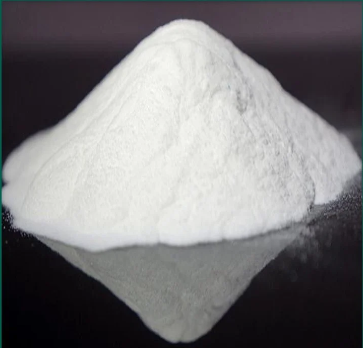
Chemical properties: White needle-like crystals with a slight odor. Sublimes. Slightly soluble in hot water and ether, soluble in acetone, ethanol, benzene, and pyridine. Converts to phthalic acid upon contact with boiling water or prolonged contact with water. Storage stable. Flammable. Dust-air mixtures pose an explosion hazard; lower limit of flammability (LCL) 12.6 g/cm³. Deposited dust poses a fire hazard. Aerosol combustion temperature 160°C, auto-ignition temperature 545°C. Toxic; permissible concentration limit 1 mg/m³.
Phthalic anhydride is one of the most important organic chemical raw materials. Its main derivatives include dibutyl phthalate, dioctyl phthalate, and diisobutyl phthalate, which are used as plasticizers for PVC, etc. It can also be used in the production of unsaturated polyester resins, alkyd resins, dyes and pigments, various paints, food additives, the laxative phenolphthalein in medicine, and pesticides such as phosmet, metribuzin, and sodium saccharin.
MIT-IVY INDUSTRY CO.,LTD
Chemical Industry Park, 69 Guozhuang Road, Yunlong District, Xuzhou City,
Jiangsu Province, China 221100 TEL: 0086-15252035038 FAX:0086-0516-83666375
WHATSAPP:0086-15252035038 EMAIL:INFO@MIT-IVY.COM purchase@mit-ivy.com
Post time: Dec-22-2025