
-

N,N-Diethylaniline CAS:91-66-7
N,N-Diethylaniline CAS:91-66-7
Colorless to yellow liquid. Has a special smell. Slightly soluble in water, soluble in organic solvents such as ethanol, ether, chloroform and benzene. Derived from the reaction of aniline and ethyl chloride. Raw material consumption quota: aniline 645kg/t, ethyl chloride (95%) 1473kg/t, caustic soda (42%) 1230kg/t, phthalic anhydride 29kg/t.
It can be used to prepare azo dyes, triphenylmethane dyes, etc. It is also an important intermediate for the synthesis of drugs and color film developers, and its applications are very wide.
Storage : The warehouse is ventilated and dried at low temperature; stored separately from acids, oxidants and food additives. -

Polyethylene-polyamines CAS: 68131-73-7
Polyethylene-polyamines CAS: 68131-73-7
Appearance Orange-red to brown viscous liquid.
Usage: Used for making anion exchange resin, ion exchange membrane, crude oil demulsifier, lubricating oil additive, etc. Also used as epoxy resin curing agent and cyanide-free plating additive.
Solubility: soluble in water and ethanol, insoluble in ether, easily absorbs moisture and carbon dioxide in the air, and forms corresponding salts with acids, which will solidify at low temperatures.
It is extremely easy to explode when exposed to impact, friction, open flame or other ignition sources. Store in a cool, dry and ventilated warehouse dedicated to explosives. The storage temperature does not exceed 32°C and the relative humidity does not exceed 80%. Keep away from fire and heat sources. They should be stored separately from oxidants, acids, and alkalis, and avoid mixed storage. Equipped with the appropriate variety and quantity of fire equipment. Suitable materials should be available in the storage area to contain spills. No vibration, impact and friction.
-

Ethylenediaminetetraacetic acid CAS: 60-00-4
Ethylenediaminetetraacetic acid CAS: 60-00-4
chemical properties
This product crystallizes out from water as white powder. The solubility in water at 25℃ is 0.5g/L. Insoluble in cold water, alcohol and general organic solvents. Soluble in sodium hydroxide, sodium carbonate and ammonia solutions.
Production method:
Reaction of ethylenediamine and chloroacetic acid. Add 100kg of chloroacetic acid, 100kg of ice and 135kg of sodium hydroxide solution (30%) into the reaction kettle, and then add 18kg of 83% to 84% ethylenediamine under stirring. Incubate at 15°C for 1 hour. Add 30Chemicalbook% sodium hydroxide solution in batches of 10L each time. After each addition, add another batch after the phenolphthalein test solution does not show red. Keep at room temperature for 12h. Heat to 90°C and decolorize with activated carbon. Filter, wash the filter residue with water, and finally adjust the pH value to 3 with concentrated hydrochloric acid. Cool and crystallize, filter and wash with water until there is no chloride ion reaction. Dried products.
Reaction of ethylenediamine with formaldehyde and sodium cyanide. Mix 60% ethylenediamine aqueous solution, 30% sodium cyanide aqueous solution and sodium hydroxide, and keep the mixture at 20°C for 0.5h. Then add formaldehyde aqueous solution dropwise. After the reaction, the chemicalbook was decompressed and the water was evaporated. Then repeat the above operation, adding excess formaldehyde for the last time to allow the sodium cyanide to react completely. Adjust pH to 1.2 with dilute acid. A white precipitate precipitated, filtered, washed with water, and dried at 110°C. Get the product.
Ethylenediaminetetraacetic acid (EDTA) is an important complexing agent. EDTA is widely used and can be used as bleaching fixative in the processing of color photosensitive materials, dyeing auxiliaries, fiber processing auxiliaries, cosmetic additives, blood anticoagulants, detergents, stabilizers, synthetic rubber polymerization initiators, EDTA is a chelate Representative substances of mixtures. It can form stable water-soluble chemical complexes with alkali metals, rare earth elements and transition metals. In addition to sodium salts, there are also ammonium salts and various salts such as iron, magnesium, calcium, copper, manganese, zinc, cobalt, and aluminum. Each of these salts has different uses. In addition, EDTA can also be used to quickly excrete harmful radioactive metals from the human body and play a detoxifying role. It is also a water treatment agent. EDTA is also an important indicator, but it is used to titrate metal nickel, copper, etc. When used, it must be used together with ammonia to function as an indicator. -

Disodium edetate dihydrate CAS: 6381-92-6
Disodium edetate dihydrate CAS: 6381-92-6
Disodium ethylenediaminetetraacetate (also known as disodium EDTA) is a powerful chelating agent. Due to its high stability constant and extensive coordination properties, it can almost interact with most metal ions except alkali metals ( Such as iron, copper, calcium, magnesium and other multivalent ions) chelate to form stable water-soluble complexes, eliminating metal ions or harmful reactions caused by them.
Disodium EDTA is a white crystalline powder that is soluble in water and almost insoluble in ethanol and ether. The pH value of its aqueous solution is about 5.3 and is used in detergents, dyeing auxiliaries, fiber processing agents, cosmetic additives, food additives, agricultural micro-fertilizers and Mariculture, etc.
Disodium ethylenediaminetetraacetate is used in food, medicine, cosmetics and other products. Food-grade disodium ethylenediaminetetraacetate can be used as a stabilizer, coagulant, antioxidant and preservative, and can protect color and resist oxidation. , anti-corrosion synergy and stabilizing effect. -
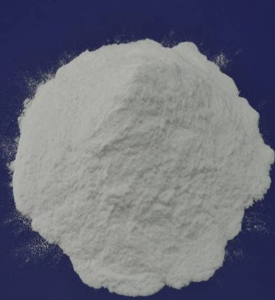
Sodium edetate CAS: 64-02-8
Sodium edetate CAS: 64-02-8
Ethylenediaminetetraacetic acid (EDTA) contains 4 carboxyl groups and can generally form disalt, trisalt and tetrasalt. Common EDTA salts include disodium ethylenediaminetetraacetate (EDTA-2Na), tetrasodium ethylenediaminetetraacetate (EDTA-4Na), dipotassium ethylenediaminetetraacetate (EDTA-2K) and ethylenediaminetetraacetic acid. Tripotassium (EDTA-3K). Tetrasodium ethylenediaminetetraacetate (EDTA-4Na) is a multifunctional organic small molecule containing amino and carboxyl groups. It is widely used in analytical chemistry as a complexing agent.
chemical propertie: White crystalline powder. Soluble in water and acid, insoluble in alcohol, benzene and chloroform.
Tetrasodium EDTA is an important complexing agent and metal masking agent. It can be used in dyeing in the textile industry, water quality treatment, color photosensitivity, medicine, daily chemicals, papermaking and other industries, as an additive, activator, water purifier, metallic ion masking agent and activator in the styrene-butadiene rubber industry. In the dry process acrylic industry, it can offset metal interference and improve the color and brightness of dyed fabrics. It can also be used in liquid detergents to improve washing quality and enhance washing effect. -

Tris(dimethylaminomethyl)phenol CAS 90-72-2
Tris(dimethylaminomethyl)phenol
CAS 90-72-2
Manufacturing method
Add phenol and 40% dimethylamine aqueous solution to the reaction kettle, stir and mix evenly, cool to below 20°C, slowly add 30% formaldehyde aqueous solution under stirring, and control to complete the addition below 30°C. Continue stirring at 25-30°C for 1 hour, then raise the temperature to 90-95°C and reflux for 2 hours. Add salt to separate the water phase, and separate the oil layer for fractionation under reduced pressure to obtain the finished product. Industrial product content is over 95%.
Appearance: Colorless or light yellow transparent liquid. Combustible.
Used as a curing agent for thermosetting epoxy resins, adhesives, sealants for laminate materials and floors, acid neutralizers and catalysts in the production of polyurethane. -
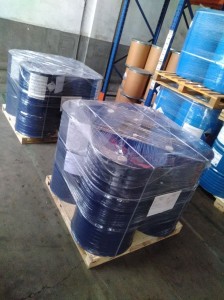
DIETHYLENE TRIAMINE (DETA) 111-40-0
DIETHYLENE TRIAMINE (DETA) 111-40-0
nature
Yellow hygroscopic transparent viscous liquid with pungent ammonia odor, flammable and strongly alkaline. Soluble in water, acetone, benzene, ether, methanol, etc., insoluble in n-heptane, and corrosive to copper and its alloys. Melting point -35℃. Boiling point 207℃. Relative density o. 9586. Flash point 94℃. Refractive index 1. 4810. This product has the reactivity of secondary amines and easily reacts with a variety of compounds. Its derivatives have a wide range of uses.
use
This product is mainly used as a solvent and organic synthesis intermediate, and can be used to prepare epoxy resin curing agents, gas purifiers (for CO2 removal), lubricating oil additives, emulsifiers, photographic chemicals, surfactants, and fabric finishing agents. , paper enhancer, aminocarboxylic complexing agent, metal chelating agent, heavy metal hydrometallurgy and cyanide-free electroplating diffusion agent, brightener, and synthetic ion exchange resin and polyamide resin, etc. -
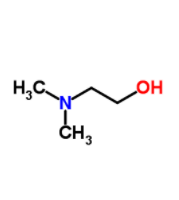
N,N-dimethylethanolamine CAS: 108-01-0
N,N-dimethylethanolamine CAS: 108-01-0
It is a colorless liquid with a pungent odor. Odor threshold: 0.25 ppm. Molecularweight 5 89.16; Boiling point =133℃; Freezing/Meltingpoint=259℃; Flash point =41℃ (oc); Autoignitiontemperature 5=295℃. Explosive limits: LEL 5=1.6%;UEL 5=11.9%. Hazard Identification (based on NFPA-704M Rating System): Health 2, Flammability 2, Reactivity 0.Soluble in water.
It is also known as dimethylaminoethanol. Studies indicate skin-firming properties, and an ability to reduce the appearance of fine lines and wrinkles as well as dark circles under the eyes. It is considered anti-aging, and antiinflammatory, and has exhibited free-radical scavenging activity. Also used as corrosion inhibitor, anti-scaling agent, paint additive, coating additive and solids separation agent. It is also used as an intermediate for active pharmaceutical ingredients and dyes. It serves as a curing agent for polyurethanes and epoxy resins. Further, it is used as an additive to boiler water. In addition to this, it is used therapeutically as a CNS stimulant.
-
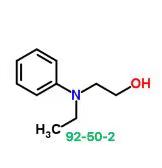
N-Ethyl-N-hydroxyethylaniline CAS: 92-50-2
N-Ethyl-N-hydroxyethylaniline CAS: 92-50-2
It Is an organic compound. It is an amide derivative between an ethyl compound and aniline.
Appearance: N-ethyl-N-hydroxyethylaniline is a colorless to slightly yellow oily liquid.
- Solubility: It is soluble in many organic solvents, such as alcohol and ether, and slightly soluble in water.
- Stability: Relatively stable at room temperature, but contact with strong oxidants should be avoided.
use:
- Chemical reagents: N-ethyl-N-hydroxyethylaniline can be used as a reagent in organic synthesis.
- Fiber dyes: It can be used as a component of dyes and is widely used in the textile and printing industries. -
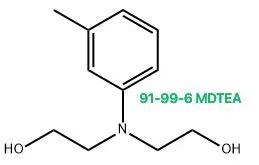
m-Tolyldiethanolamine CAS: 91-99-6
m-Tolyldiethanolamine,also known as DEET (diethylamide N,N-dimethyl-3-hydramide), is a common insect repellent. It is soluble in organic solvents such as ester, alcohol, and ether, and slightly soluble in water. This compound has good heat resistance and light resistance.
m-Tolyldiethanolamine is mainly used as an insect repellent to prevent bites and harassment from mosquitoes, ticks, fleas, grasshoppers and other insects. Its efficacy lasts for a long time and has a high repellent effect on mosquitoes and other insects. It is widely used in outdoor activities, wilderness exploration and military protection and other fields.
There are many methods for preparing N,N-bishydroxyethyl m-toluidine. One of the commonly used methods is to react m-toluidine and formamide in the presence of an alkaline catalyst. Specific steps are as follows:
1. React formamide with m-toluidine under alkaline conditions to generate N-formyl m-toluidine.
2. Heat the reaction product under acidic conditions to convert N-formyl m-toluidine into N,N-bishydroxyethyl m-toluidine. -

Triethylene glycol CAS: 112-27-6
Triethylene glycol CAS: 112-27-6
It is a colorless, odorless, hygroscopic, viscous liquid. Miscible with water and ethanol, slightly soluble in diethyl ether, almost insoluble in petroleum ether.
Used as an excellent dehydrating agent for natural gas, oil field associated gas and carbon dioxide; used as a solvent for nitrocellulose, rubber, resin, grease, paint, pesticides, etc.; air disinfectant; polyvinyl chloride, polyvinyl acetate resin, glass fiber and triethylene glycol lipid plasticizers for asbestos pressed boards; tobacco anti-drying agents, fiber lubricants and natural gas desiccants; also used in organic synthesis, such as the production of brake oil with high boiling point and good low temperature performance。
It is also used as gas chromatography stationary solution and solvent for nitrocellulose and various resins. It is also used in organic synthesis. -
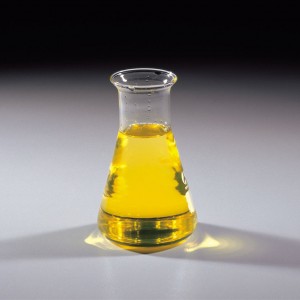
Dimethyl sulfate CAS:77-78-1
Dimethyl sulfate CAS:77-78-1
It is colorless transparent oily liquid. Slightly soluble in water, soluble in ethanol, ether, acetone, etc.
It is widely used in medicine, pesticides and other industrial industries. It is a good methylating agent and is used in the manufacture of dimethyl sulfoxide, caffeine, vanillin, aminopyrine, trimethoprim and the pesticide acephate, etc. In organic synthesis, it is used as methylating agent instead of alkyl halide. -
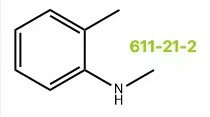
N-methyl-o-toluidine CAS:611-21-2
N-methyl-o-toluidine CAS:611-21-2
It is a light yellow oily liquid. Melting point 119.5℃, boiling point 209-210℃。Usage: cycloalkylamine, aromatic amine derivatives,, also used in the intermediate synthesis of fuel bodies。
Details:
Melting point -10.08°C (estimate)
Boiling point 207°C
Density 0.97
Refractive index 1.562-1.565
Flash point 79.4°C
Storage conditions Keep in dark cool place
Form: clear liquid -
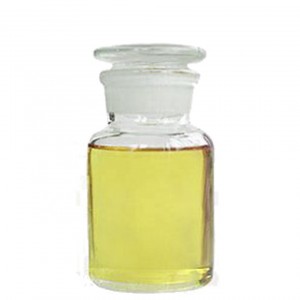
N,N-Dimethylcyclohexylamine CAS:98-94-2
N,N-Dimethylcyclohexylamine CAS:98-94-2
Chemical Properties
Colorless or light yellow transparent liquid.Mainly used as polyurethane rigid foam catalyst. One of the major applications is insulating foams, including sprays, panels, glue laminates and refrigeration formulations. N,N-dimethylcyclohexylamine is also suitable for the manufacture of rigid foam furniture frames and decorative parts. This catalyst is used in hard foam Chemicalbook products. It can be used alone as the main catalyst without adding organic tin. It can also be supplemented with JD series catalysts according to process and product requirements. This product is also used as a rubber accelerator and an intermediate for synthetic fibers.
-
2-(2-Aminoethylamino)ethanol CAS: 111-41-1
2-(2-Aminoethylamino)ethanol CAS: 111-41-1
Chemical Properties
Colorless, light yellow transparent viscous liquid. It is hygroscopic, strongly alkaline, and has a slight ammonia smell. Miscible with water and alcohol, slightly soluble in ether.
Uses:
Used in shampoos, lubricants, oil field buffers, resin synthesis, textile auxiliaries, imidazoline amphoteric surfactants, etc.
It is also used in the production of dyes, resins, rubber, flotation agents, insecticides, and surfactants. The formulated corrosion inhibitor 1017 is used in petrochemical production. This product is an excellent low-toxic room-temperature curing chemical agent for epoxy resin, which is significantly better than ethylenediamine. This product is used with epoxy resin and is widely used for bonding various metal and non-metal parts, formulating anti-corrosion epoxy coatings, casting cable joints and other mechanical and electrical parts.